Showing posts with label Bioware. Show all posts

Thursday, May 10, 2012

Return of the Spectres!

Game: Mass Effect 3

System: Xbox 360, PS3, PC

Release: March 2012

Bioware is to be commended for creating the amazing universe found in the Mass Effect trilogy. The aliens, characters, worlds, and stories will be talked about for ages to come. One could even argue that this is the current generations Star Trek or Star Wars phenomena. A theory that will be tested with time.


Mass Effect 3 marks the conclusion of Commander Shepard's adventures. The game begins with the much anticipated Reaper invasion. Once again Shepard must take command of the Normandy, and lead a team to save the universe from extinction. As with my other Mass Effect reviews I will not spoil the plot, but rest assured the journey is a worthy experience. The ending, however, leaves much to be desired, and will be the focus of another post.

The major difference between the first two titles and the last is the invasion itself. Everything seems much more urgent and desperate then before. Wandering the galaxy collecting resources, for example, has been streamlined. Now planets are scanned while the Normandy is flying about the sector. When the ping picks up anything of interest the scanning mini game returns from the second game. The more scans used, the greater chance Reapers will find, give chase, and destroy the Normandy. This adds to the looming external threat that was only briefly felt in the earlier games.

In the second Mass Effect, the main focus was building an elite team and forging a relationship with the crew. If you didn't complete quests for squad mates, then odds are they would parish at some point in the game. No such power is granted to Shepard this time around. The focus is the ever present invasion, and the need to gather resources. This is what drives the majority of missions, and as a result I didn't feel as connected with some of the new crew mates.

Speaking of the crew, the Normandy is not home to has many characters as the previous titles. There are about half as many combat comrades, and four of them are from the other games (Garrus, Tali'Zorah, Liara, and Ashley/Kaidan). New characters include EDI, who finds herself with a new sexy body, and James Vega, the tough but lovable soldier with a Latin flare. As with most Bioware games each squad mate has deep conversation trees that could lead to potential intimate relationships and side missions. The latter, however, is lacking compared to ME2.

(On a more personal note, I really liked how Mass Effect 3 had characters visiting Shepard's quarters on the Normandy to talk. In my Mass Effect 2 review I mentioned how annoying it was to sit through load screens just to discuss personal issues. Glad someone out there was listening/reading critiques from the fans.)

What about those lovable folks from the second game? If they aren't apart of your crew, then they're featured in various segments through ME3. Some play a more pivotal role then others, but rest assured Bioware left no one out. Unless, that is, you had them killed over the course of the trilogy. In that case they'll be replaced with a similar but different character, or will not show up at all. Tali'Zorah, for example, is a key figure in the third game. Her untimely demise will have a greater impact then the death of Grunt or Jack.

This brings me to one of the most awesome features of this series--the imported character. Bioware has created a world where one character can be played in three games. The choices made are felt throughout the series, which increases re-playability substantially.

From big story beats to subtle conversations you truly feel like your decisions matter, and will have an impact in the game world. Despite the controversial ending, I praise Bioware for providing an awesome connected experience across three different games. Something I've personally never seen before.

Regardless of your past decisions, with the Reaper invasion in full force you'll be spending plenty of time in battle. Combat in ME3 is fluid and fun. Like the second game powers can be mapped to three hot keys, and encounters can be stopped at any time by bringing up the power wheel. This allows players to coordinate teammates for devastating blows against more challenging opponents. Level design is suitable, and a few of the scenarios fit the cliche--edge of your seat action!

Unlike the first game, each class is fun and offers a unique experience encouraging multiple playthroughs. In fact, the combat and classes are so much fun that they are the main force driving the somewhat repetitive multiplayer. That's right folks. ME has MP.

Four players take on the rolls of various species and classes to fend off waves of enemies. Each class has a number of races to choose from. The cool part is the leveling system. Classes gain experience as a whole. E.g. Playing as the Geth engineer will level up the Human of the same class.

There was even free DLC adding more maps, weapons, and characters to unlock. Completing multiplayer mission objectives will be rewarded with credits that can be cashed in for additional content. There are numerous packages to purchase that offer a variety of rewards. The more expensive the pack, the more likely a rare item will be unlocked.

This seems awesome at first. A reward system to increase re-playability. Then you spend an entire weekend trying to unlock one character and fail. All of a sudden MP has lost its replay value. Unfortunately if you want a particular ending for the campaign you will have to play MP.

Yep! The multiplayer affects single player, and will dictate subtle events during the final part of the game. A map appears in both segments denoting the "Galactic Readiness." The higher the percentage the better, which can be a challenge.

The percentage declines steadily over time, but will never go below 50%. If an MP class reaches the level cap at 20, then that class can be promoted to SP. This will result in a permanent percentage increase in your Galactic Readiness, and the promoted class will be reset to level one.

Although the relationship between SP and MP is poorly explained in game I do enjoy the concept. Not many games connect various modes into a cohesive unit. Multiplayer is also a good quick fix for fans who want more action then plot. All of this illustrates an attempt to mix up the traditional Bioware formula.

Mass Effect 3 has it all. An ending to a trilogy brought to us by the awesome folks at Bioware. They continue to uphold their reputation for great writing and fun experiences. They've also improved each iteration in the series at numerous levels. Add on some multiplayer and you have a robust package that is sure to please fans of shooters and RPGs alike. I whole hearty recommend this franchise, and I look forward to future (non-Shepard based) adventures in the Mass Effect universe.

Monday, August 15, 2011

Dragon Effect II

Game: Dragon Age II

System: PC, Xbox 360, PS3

Release: March 2011

Dragon Age Origins was a fantastic game that brought the classic fantasy setting to gamers everywhere. This was especially welcomed by console owners looking for something besides Elder Scrolls. DAO, however, was full of bugs and really seemed like a rough draft for something greater.

Enter Dragon Age II. Bioware tightened up the animations and combat, and added features seen in the studios other successful franchise Mass Effect. The end result was another epic RPG with plenty of combat. The lore of Dragon Age was also expanded upon, and sets up the franchise for another sequel.

Because the sequel was very similar to the original I am not going to waste too much time on the basics. The most notable change was made to combat. Despite the complaints of "dumbing down" the game I feel the changes were for the better. Enemies weren't as glitchy, there were more combat encounters, and the spell/talent trees have been simplified. The same classic strategy of healer, tank, DPS is still running strong, and this franchise is still the closest thing to World of Warcraft that isn't an MMO.

Art bugs and level of detail issues also saw a touch up from the original. Collars actually stayed on shirts, swords hit enemies, lips moved when people talk, mountains did not disappear, etc. Everything from character models to environments also saw a welcomed increase in detail. Only on a few occasions was the suspension of disbelief disrupted because of art issues. Overall the game ran, in combat and out, much smoother then the previous tittle.

The most jarring change to Dragon Age II came from the studios infusion of Mass Effect features. The main character can only be human, and the last name will always be Hawke. Gone are the multiple race background stories. This, however, allows the main playable character to have a speaking role which enhances the games story telling ability. The dialogue tree found in Mass Effect is also present.

Like Mass Effect 2, players can import their saved data from Dragon Age Origins. This will effect their experiences in Dragon Age II, and dictate certain events found throughout the game. A particularly awesome moment, for example, will occur if you sent Alistar into exile during the first game.

Finally, the events in Dragon Age II--like Mass Effect 2--leads to an inevitable sequel. This ploy really bugged me when Halo 2 came out, but by now I've come to expect such shenanigans from game developers. I am really interested to see how all the events in Dragon Age II play out, which is music to Bioware/EA's ears.


In the end Dragon Age II was another outstanding RPG from Bioware. The annoyances--repetitious level design and tons of load screens--were few, and did not hinder the overall experience. Cleaning up the art and combat was a huge plus, and the infusion of Mass Effect features was a smart move. I'm really looking forward to the next Dragon Age tittle, and the conclusion to this epic franchise. Snerts Snazzy Score is On Sale! for the average gamer, and Full Price! for fans of Bioware and/or classic fantasy RPGs.

Thursday, March 4, 2010

Cowboy Space Opera 2

Game: Mass Effect 2

System: Xbox 360 & PC

Release: January 2010

Commander Shepard is back in action for another epic Bioware RPG adventure. The second in a trilogy, Mass Effect 2 begins a few years after the events of the first. Human colonies are disappearing on the out skirts of Citadel Space, and the Normandy is mysteriously attacked on a routine mission by an unidentified species. More could be said, but this is one of the few games where I won’t spoil the story. Besides it’s Bioware so you know the game will have good writing, voice acting, and forty plus hours of RPG action.My two biggest critiques of Mass Effect 1 were mediocre combat and boring planet exploration. The sequel suffers from the later, but enhanced the gunplay significantly. Let us start with the crap. The galaxy map is back and remains the ships navigational hub. Explore various star clusters filled with space stations, moons, planets, and massive stars. Instead of landing on a planet for resources the Normandy scans the surface from orbit. The scanning mini game makes players hold down the Left Trigger to activate the radar. A graph denotes when minerals are detected. Pressing the Right Trigger will launch a probe to collect the goodness.

Occasionally a mission based on the scan will necessitate a landing party. Piling into a shuttle Shpeard’s party lands and the side quest begins. This means there are no more lego vehicle sections and crappy cut n’ paste planets. Now players get cut n’ paste bases and a few oddball exceptions. The side quests offer nothing worthwhile, which is a mix blessing. For those not interested in exploring every corner of the universe not needing anything from the side quests is a blessing. For the rest of us it feels like a waste of time. Where’s my super bad ass reward for being a completionist?

Combat has seen a significant overall, and many of the RPG elements have been stripped away. The sequel is more akin to an action game like Gears of War.It is easier to get behind cover, return fire, and give squad commands. Powers can be set to a hotkey which minimizes the need to pause the action and access menus. The powers themselves are more effective, and a variety of heavy weaponry—rocket launcher, mini nuke, laser beams—are available to help take out larger enemies. Loot is limited to upgrades of existing weapons, armor, and abilities. Veterans of Mass Effect and new comers will find this new streamlined combat RPG a welcomed change from the usual bloated menu system and unsatisfying action segments.

Speaking of veterans, if you have completed the first Mass Effect your character and deeds will be transferred to the sequel. This is a fantastic feature that PC gamers may be familiar with, but the poor console folk rarely see. Bioware does an excellent job incorporating Shepards past actions. Major events like deaths and romantic involvements are an obvious must, but it’s the smaller touches that really enhance the experience. All of a sudden an NPC will come up to Shepard and praise/scold him for his past deeds. My personal favorite is the return of Conrad Verner. The single greatest achievement of this series is the continual development of this fictional galaxy. I can’t wait to see how my actions will affect the final installment.

As mentioned above the main plot, character growth, and writing reflect the quality you would expect from a Bioware game. I am, however, getting a little tired of the same old formula. The majority of quests involve gathering an elite team to take on a threat and save the galaxy. Each team member has a rich past that can be explored through various dialogue segments and one side mission critical to the teammate’s survival. In Mass Effect 2 the main hub for the beginning the quest is the Normandy. There are four levels each with their own load screen. If these issues are so dam important to the crew then why aren’t they coming up to the Capitan’s quarters? I don’t mind doing these quests, but this was the majority of the game. After gathering a team in the last dozen Bioware games it would be nice to have one ready to go with no side issues/quests. Just an open galaxy with various missions that aren’t necessarily related to anyone aboard the Normandy.

Mass Effect 2 is another great Bioware game with all the usual features. This is also one of their most polished games. Importing your character from the first game is simply awesome and enriches the fictional universe. Fans will be enthralled with the new combat system, but saddened by another round of boring planet exploration. Bioware veterans may also be getting sick of the same old formula, but let’s not kid ourselves. Until some other company comes up with something better Bioware will continue to sell and score well. Snerts Snazzy Score for Mass Effect 2 is a 4.8 out of 5.

Friday, November 27, 2009

Bioware Has Done It Again

Game: Dragon Age Origins

System: PS3, Xbox 360, PC

Release: November 2009


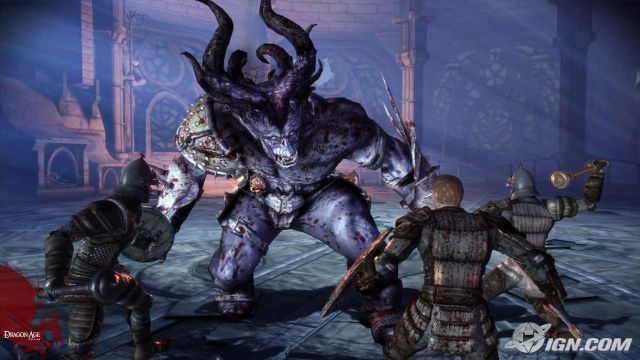
Dragon Age: Origins is another fantastic rpg from Bioware. This time the development team has set aside the far reaches of space and returned to the land of Tolkein like fantasy. So if you’re looking for another KOTOR forget, and if you want another adventure with Commander Shepard then you best wait to next year. If, however, you want an epic fantasy that will suck you in for hundreds of hours, then look no further.

One of the first things players will notice about Dragon Age is the vast selection of origin stories. There are a total of six starting zones that differ significantly and affect certain scenarios throughout the game. Players can choose their gender, race, background, and class. The races are as basic as it gets with the human, dwarf, and elf trio. In this fantasy land called Ferelden humans rule all, and they are their usual greedy arrogant selves. They are also very religious following their Christian like belief via the Chantry. There is only one background story for the human race involving nobility, but I have yet to play through that opening. Dwarves have their own kingdom, but are constantly warring with themselves and the Darkspawn—evil orc like creatures. There are two starting areas for dwarfs that resemble the classic tale The Prince and the Pauper. The elves are the least prosperous of the races. They are either ex-slaves trying to get by in the city slums, or nomadic Dalish elves who attempt to bring back the glory days. Each of these lifestyles represents the starting areas for elves. The final background story is not dictated by race, but by class. All mages begin at the Circle of the Magi; a school/penitentiary for all law abiding mages.

The other two classes in Dragon Age are Warrior and Rogue. Some may criticize Bioware for being so generic, but I personally found the common terminology a relief. I’ve memorized enough useless information in my life, and the last thing I need is another term for armored badass who swings giant weapons to kill things. Anyone familiar with Dungeons and Dragons or World of Warcraft will quickly realize the proper roles for each class. Mages and Rogues are support and damage classes while the Warrior is an agro hogging meat shield. There is no all powerful class, and each has its own unique advantages/experiences. The combat is set around a squad of four so pick your favorite class for the main character. By the time you finish up the first segment of the game you will have a rogue, warrior, and mage to party up with.
Customization is the name of the game in Dragon Age. After selecting their gender, race, background, and class players get to shape their hero to their liking. The same facial customization features used from Mass Effect are found in Dragon Age. Now players can create ugly dwarfs and elves in addition to humans. There are also voice options that dictate basic battle chatter for your main character. This is a great feature, but sadly pales in comparison to Mass Effect which has voice acting for the main character—something rarely seen in rpgs of this nature. In addition to basic looks and class talents players are allowed to customize characters with specializations. There are four for each class, and they have to be unlocked through quests and in-game books. Once a specialization is discovered it becomes available across all playthroughs. Each build plays differently and unlocks unique abilities. Rogues, for example, can become Duelists/Assassins who focus on melee combat, or Bards/Rangers that better compliment an archery build. This extra layer of customization improves replay value, and overall enjoyment of the game.

Sticking to the fundamentals is the middle name of the game for Dragon Age. Like other Bioware titles the writing and gameplay are familiar and solid. Every bit of dialogue or text is entertaining to absorb. The plot is generic but it works. There are also dozens of hard choices and adult scenarios throughout the game. Sometimes you’ll be stuck with a bad or worse decision. SPOILER START—During one quest you get to pick between the life of the mother or child.—END SPOILER These aren’t your cookie cutter good or bad scenario. You’ll be forced to make tough decisions that may not sit well with your high morals—if that’s the type of role playing you enjoy. Your companions will also judge your actions harshly, and if they disapprove significantly they’ll leave. When I went through the game as a big jerk I ended up with only six out of nine teammates.

Gameplay is very similar to Mass Effect and KOTOR. Combat is in real time, but can be paused at any moment to dictate a characters next move. It is essential to figure out proper tactics for each class. The default AI is pretty dumb, but can be molded into a brilliant fighter. As mentioned early each class has their own role or style of play. Melee Rogues should always attempt to backstab opponents. Mages work best from a distance, and warriors charge into battle. There isn’t anything new to combat in Dragon Age, but everything is done well.

Bioware manages to uphold their awesome reputation for great writing and solid gameplay. They also, unfortunately, continue to release games full of bugs. So I guess you can say, shipping a game with numerous bugs is the last name of the game. Throughout your adventures in Ferelden an observant player will notice numerous art issues. Clothing textures disappear frequently around the neck and shoulder. Fingers lack collision and magically phase through forearms. The level of detail, or LOD, is also sporadic with backgrounds suddenly popping in and out. In addition, cut scenes will repeat themselves if a player interacts with a NPC before the proper script is triggered. The quest helping the templar in the Alienage orphanage being the worst offender. Audio bugs are also an issue. There is more then one occasion where the dialogue cuts out, and with no subtitles on you tend to miss important information. Finally each playthrough has resulted in at least one progression stopper. These issues are not enough to discourage purchasing this game, but they are an unwelcome distraction.

Hundreds upon hundreds of hours can be spent playing this game. There are numerous possibilities for each scenario, and character customization is gynormous. The combat is solid and the writing fantastic. Bioware has released the quintessential fantasy rpg for this generation of consoles. Take away the bugs and this game receives a perfect score. Unfortunately I can’t simply ignore so many small issues, and as a result Snerts Snazzy Score grants Dragon Age Origins a respectable 4.6 out of 5.